By Mary Ericson, Philanthropic Advisor, NoCo Foundation
Nonprofit organizations are bold advocates, creative problem-solvers, and tireless champions for change. Development professionals in particular wear more hats than most job descriptions could possibly capture—event planner, grant writer, marketer, relationship builder, and more. In a world where both time and dollars are scarce, it can feel impossible to carve out space for another initiative, especially one that feels complex.
Charitable gift planning, often called “planned giving,” can easily fall into the someday category. Yet the impact of planned gifts makes them far too important to postpone.
The data tells a compelling story: planned gifts, which are typically made through assets or estate plans, are on average 200 times larger than a donor’s largest annual gift. For many organizations, planned giving becomes the cornerstone of building or growing an endowment, providing long-term sustainability, stability during economic shifts, and the ability to think beyond the next fiscal year.
For nonprofits working to address some of society’s greatest challenges, planned giving isn’t just a fundraising strategy, it’s a transformational opportunity.
So why isn’t everyone doing it? Planned giving can feel overwhelming.
Planned giving touches on tax law, estate planning, and conversations about legacy and mortality. Even seasoned development professionals can feel intimidated by the technical aspects or unsure how to begin the conversation with donors. Add a full calendar and limited staff capacity, and it’s easy to understand why many organizations put it off.
That’s exactly why the Nonprofit Planned Giving Cohort was created.
Launched by the NoCo Foundation, in partnership with the Colorado Planned Giving Roundtable, in 2025, and now in its second iteration, the Cohort is a six-week learning experience designed specifically for nonprofit executive directors and development leaders who want to launch—or re-launch—a planned giving program with confidence.
Participants learn from experienced charitable gift planning professionals who break down complex topics into practical, actionable steps. The curriculum covers:
- Making the case for planned giving to your board
- Identifying and engaging the right donors
- Marketing and messaging strategies
- Understanding different planned giving vehicles
- Building internal systems for long-term success
Equally valuable is the opportunity to learn alongside peers. The Cohort fosters connection among nonprofit leaders struggling with similar issues, creating a support network designed to continue long after the six weeks conclude.
Claire Richardson, Development Director of Dementia Together and participant in the 2025 pilot, shared:
“Before the Cohort, planned giving felt like something we should be doing but didn’t quite know how to start. The presenters made complex topics accessible, and I now feel empowered to put what I learned into action.”
At its heart, planned giving is about helping donors align their values with the legacy they want to leave. Before nonprofits can guide these conversations, they need knowledge, clarity, and confidence.
Northern Colorado’s nonprofit community is already strong. By equipping organizations with the tools to approach donors in new and meaningful ways, the Nonprofit Planned Giving Cohort is helping build a more resilient philanthropic ecosystem—one that can support our region’s needs not just today, but for generations to come.
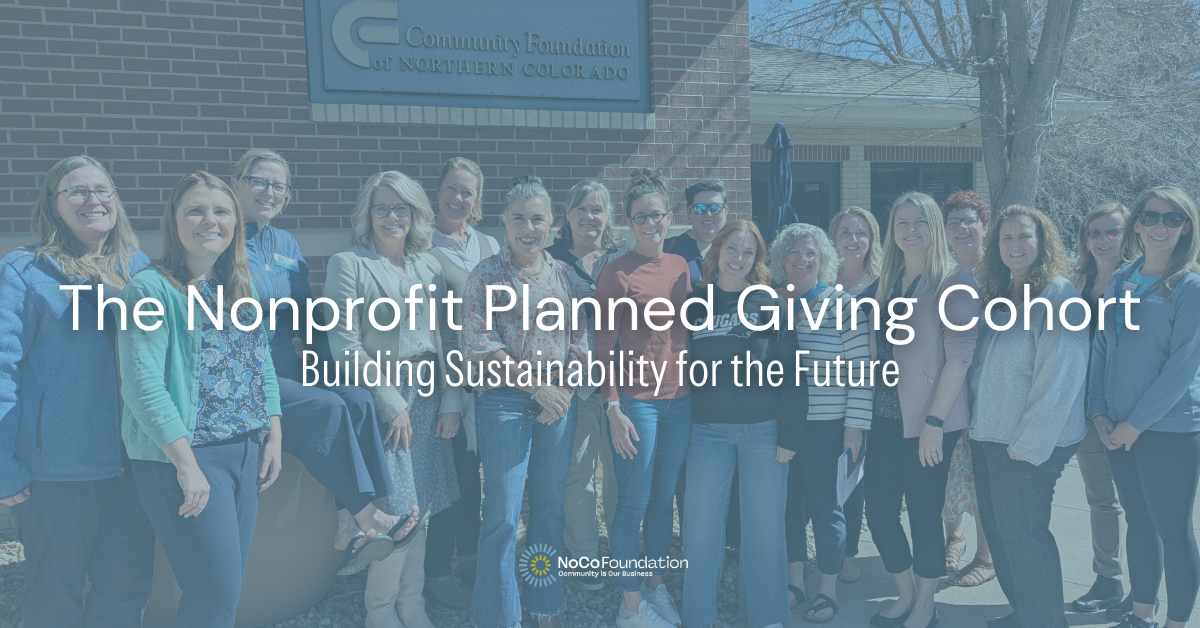
As the 2026 Cohort continues, we’d like to recognize members of the Cohort for their commitment to growing their organization’s planned giving practice.
- Chad Bauer
- Connor Bergman
- Melody Bettenhausen
- Kimberly Corban Rourke
- Helen Goody
- Kim Graves
- Caterina Hall
- Scott Hapner
- Isabel Henry
- Jessica Jones
- Alison Jones-Lockwood
- Mandalee McNeil
- Colleen Meyer
- Sarah Saltee
- Megan Streetman
- Nate Taverner
- Alisa Tucker
- Tricia Vincent
- Jake Weinzierl